

Research Journal
How to Choose High-Purity Research Peptides: A Lab Buyer’s Guide

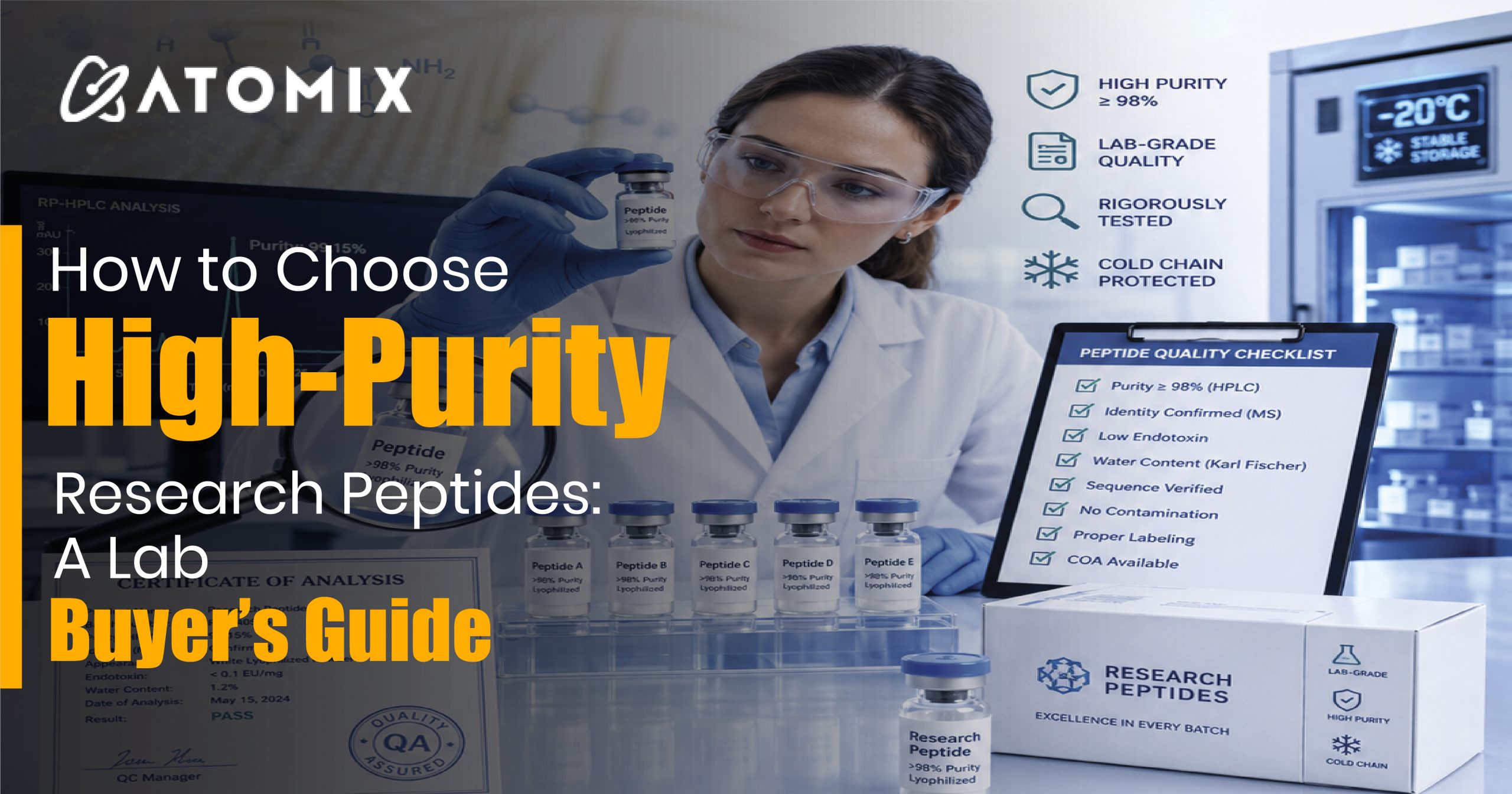
If you’ve ever been responsible for ordering research peptides, you already know it’s not as simple as picking a product and moving on. The difference between a reliable supplier and a questionable one usually shows up later in inconsistent results, unclear documentation, or batches that just don’t behave the same way twice.
So this guide is meant to keep things practical. No fluff. Just the things that actually matter when you’re trying to make a solid purchasing decision for a lab.
At Atomix Research, we’ve seen how much smoother research becomes when the basics are done right from the start.
1. Purity isn’t just a number on a label
Most suppliers will advertise “high purity” peptides. But in real lab work, that number only matters if you know how it was measured and whether it’s consistent.
For most research-grade work, you’re typically looking at peptides verified through methods like HPLC and mass spectrometry. What you really want to see is not just “99% purity,” but confidence that the testing is real, recent, and tied to that specific batch.
If that detail is missing or vague, it’s usually worth slowing down before you order.
2. If there’s no COA, that’s a problem
A Certificate of Analysis isn’t optional in serious research environments.
A proper COA should clearly show:
- What the peptide actually is (not just a name on a website)
- The purity result for that exact batch.
- The test method used
- A lot of batch numbers you can trace back.
If a supplier hesitates to provide this, or sends something generic that could apply to any order, that’s usually a sign to reconsider.
Good suppliers don’t treat COAs like extra paperwork; they treat them as part of the product.
3. The “how it’s made” matters more than people think
Most buyers focus on what they’re buying, not how it’s made. But production quality is usually what decides whether batches stay consistent over time.
You don’t need to know every technical detail of synthesis, but you should expect a few basics:
- Controlled production environments
- Clear internal quality checks
- Batch tracking that actually works
- No mystery about where materials come from
If everything is “high quality” but nothing is explained, that’s usually marketing filling in for missing detail.
4. Consistency is where trust is built
One good batch doesn’t mean much if the next one behaves differently.
Reliable suppliers understand this and build systems around consistency. As a buyer, it’s fair to ask:
- Do batches stay consistent over time?
- Can results be traced back to production records?
- Is there any visible quality trend or testing history?
In research, consistency often matters more than perfection.
5. Storage instructions are not “fine print.”
Peptides are sensitive materials. How they’re stored and handled can easily change their stability.
A supplier that knows what they’re doing will clearly explain:
- Storage temperature before and after opening
- How to reconstitute properly
- Expected shelf life under proper conditions
If these instructions are missing or overly vague, it usually creates problems later in the lab, even if the product itself was fine when shipped.
6. Transparency is usually the simplest quality test
You can learn a lot just by how open a supplier is.
Do they clearly label products as research-use only?
Do they share documentation without hesitation?
Do they explain limitations instead of overselling?
The more straightforward the communication, the easier it is to trust what you’re getting.
Final thought
Choosing research peptides isn’t really about finding the “best looking” option online. It’s about finding a supplier that won’t create uncertainty later in your work.
When purity is real, documentation is clear, and batches are consistent, everything downstream becomes easier: your data, your workflow, and your confidence in the results.
That’s the standard we try to keep at Atomix Research: not just supplying peptides, but making sure researchers aren’t left guessing.