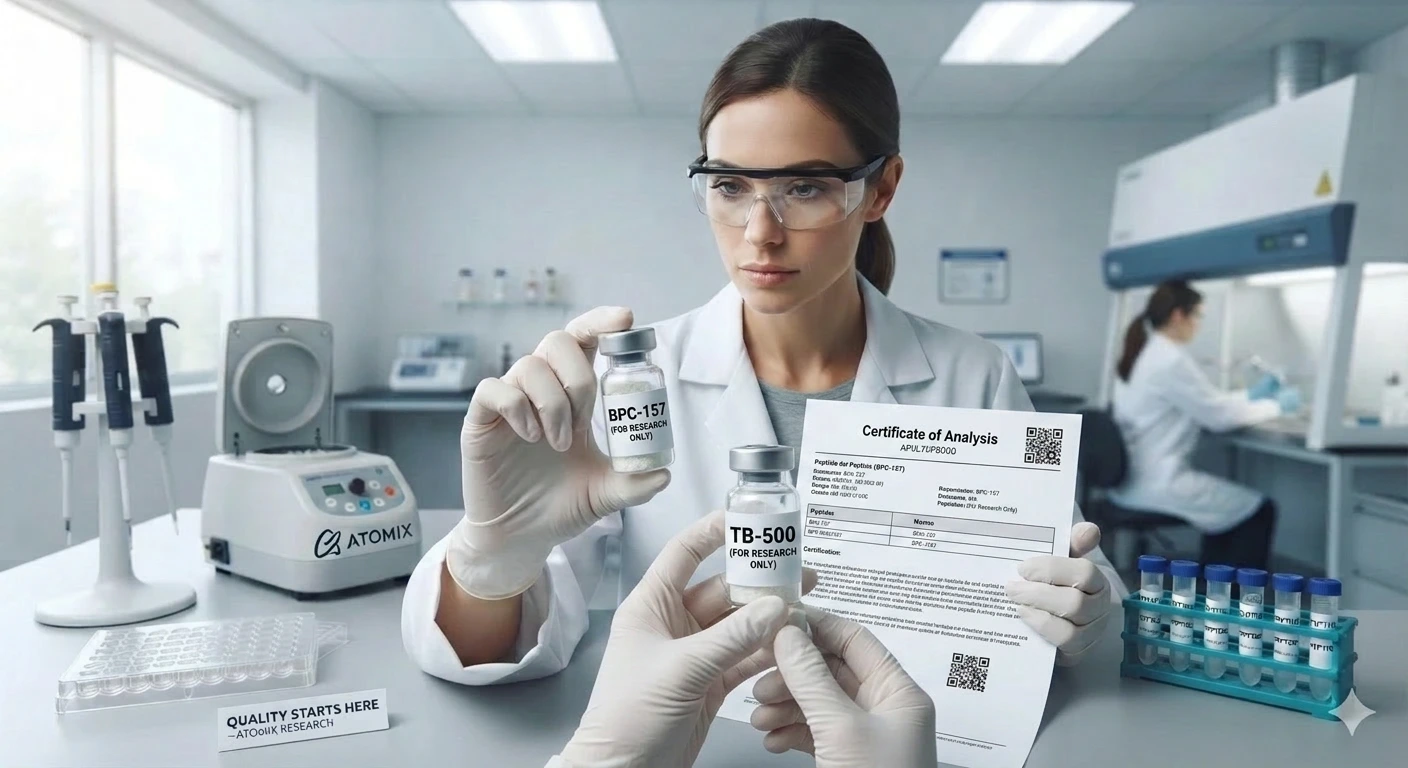
If you’ve been following peptide discussions lately, you’ve probably noticed how often names like BPC-157 research and TB-500 peptide come up. They’re everywhere: forums, research blogs, and conversations among people exploring healing peptides in lab settings.
But here’s the thing: there’s also a lot of confusion around them.
At Atomix Research, we’ve seen firsthand how questions usually start:
“Are these for recovery?”
“Do they help healing?”
“Can they be used personally?”
And this is where it’s important to slow things down and bring clarity into the conversation.
Let’s Start with the Basics
Compounds like those studied under BPC-157 research and the TB-500 peptide are part of a broader category often referred to as healing peptides. Researchers are interested in how these compounds behave in controlled environments, particularly in relation to tissue response, cellular activity, and biological repair mechanisms.
But, and this is important, all of this sits firmly within recovery research and regenerative science conducted in labs.
Not real-world use.
Not a personal application.
Not approved outcomes.
Just structured, controlled research.
Why Are These Peptides Getting So Much Attention?
The interest in regenerative science has grown a lot in recent years. Researchers want to understand how the body responds at a deeper level, not just what happens on the surface, but what’s happening inside cells, tissues, and signalling pathways.
That’s where studies like BPC-157 research come in. Scientists observe how certain compounds behave in lab conditions, looking for patterns, responses, and consistency.
Similarly, the TB-500 peptide is often discussed in relation to cellular movement and structural response in controlled environments. Again, it’s about observation, not application.
Platforms like Atomix Research often highlight similar topics in recovery research, which shows just how active this area has become.
Where Most Confusion Happens
Let’s be honest, a lot of people come into this space expecting something different.
They hear “healing” and immediately think results.
They see trending compounds and assume direct use.
And that’s where problems usually start.
The reality is:
These are healing peptides studied in recovery research.
They are not approved for personal use.
They are not marketed for human consumption.
At Atomix Research, we make this clear because it matters. When expectations are set properly from the beginning, it avoids frustration later on.
Why Researchers Are Still Interested
Even with these boundaries, interest in regenerative science continues to grow. Why?
Because researchers are not chasing quick answers, they’re trying to understand systems.
They’re looking at:
- How compounds interact with cells
- How tissues respond in controlled models
- What patterns repeat over time
This is what makes BPC-157 research and studies around the TB-500 peptide relevant. Not because they promise outcomes, but because they help build knowledge.
A More Informed Buyer Today
Another thing we’ve noticed is how much more informed customers are becoming.
People now ask:
- Is this product clearly labelled?
- Is the supplier honest about usage?
- Are expectations explained properly?
This shift is important. It’s moving the industry toward more transparency and less confusion.
Final Thoughts
The growing attention around BPC-157 research, TB-500 peptide, and other healing peptides shows how active the field of recovery research and regenerative science has become.
But with that attention comes responsibility, especially when it comes to understanding what these compounds are actually for.
They are tools for research.
They are studied in controlled environments.
They are not intended for personal use.
Keeping that distinction clear is what helps build trust, avoid confusion, and create a better experience for everyone involved.