>99% HPLC
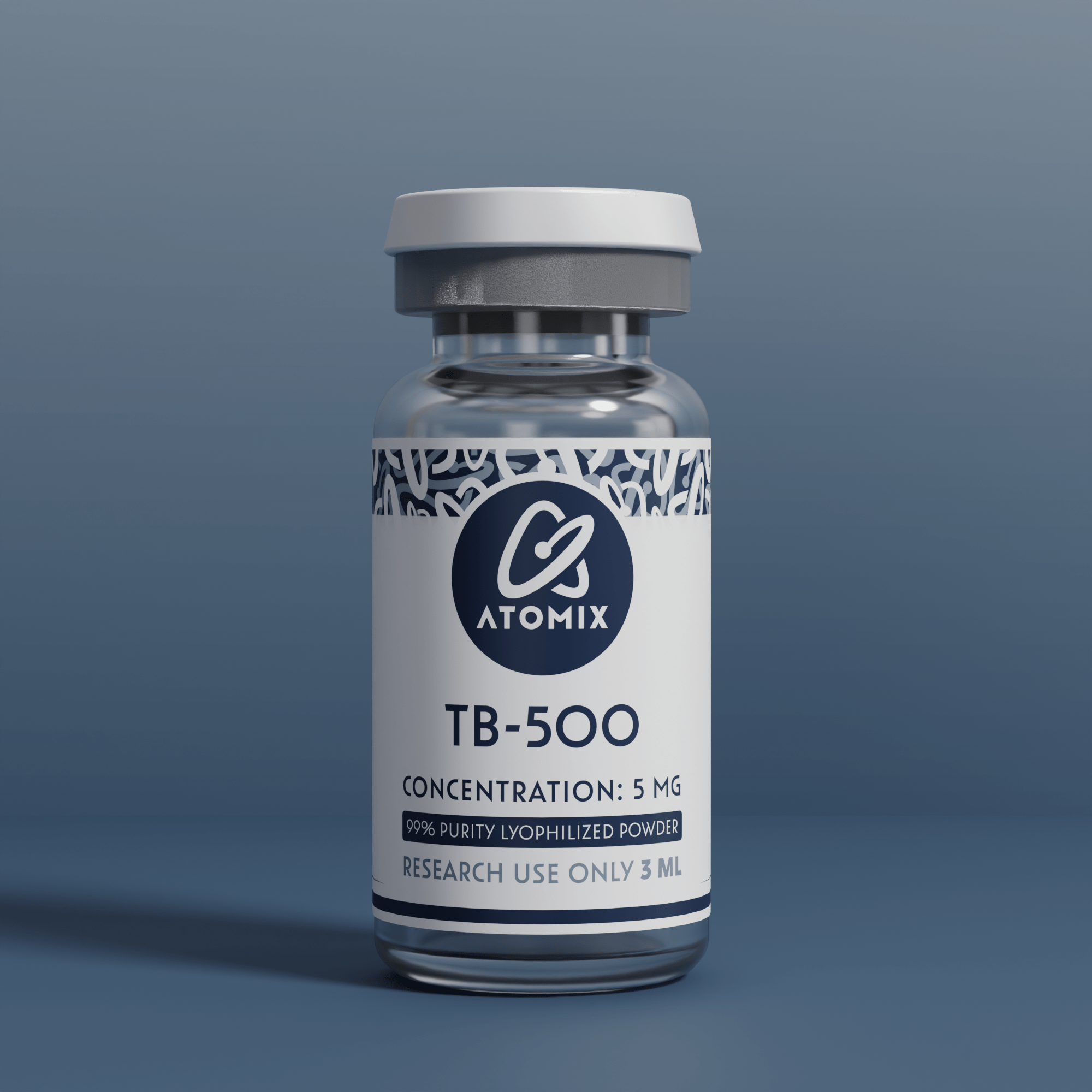
TB-500 (5 mg, 10 mg)
Atomix Research, Peptides
From
Price range: $29.99 through $54.99
Select options

Research use only
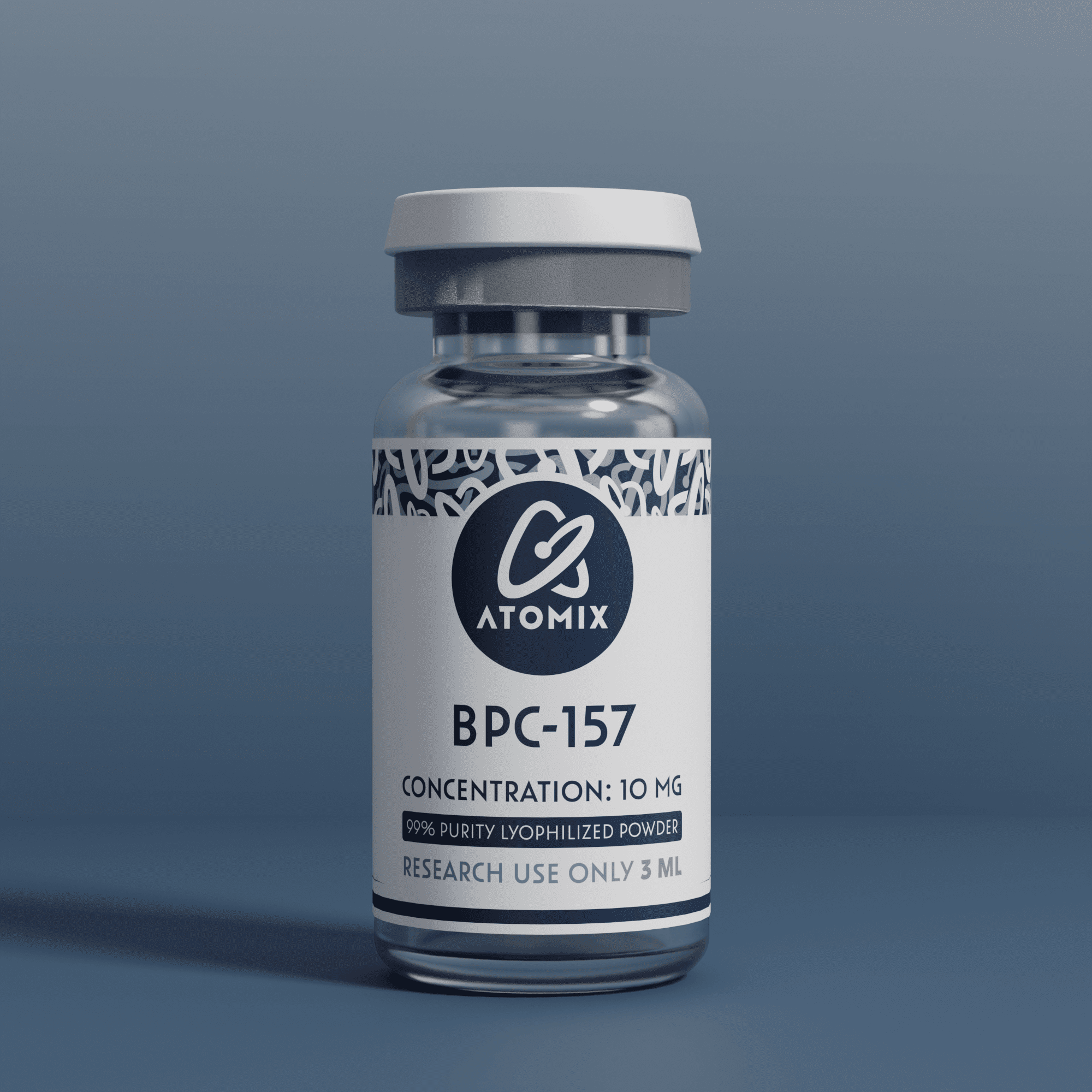
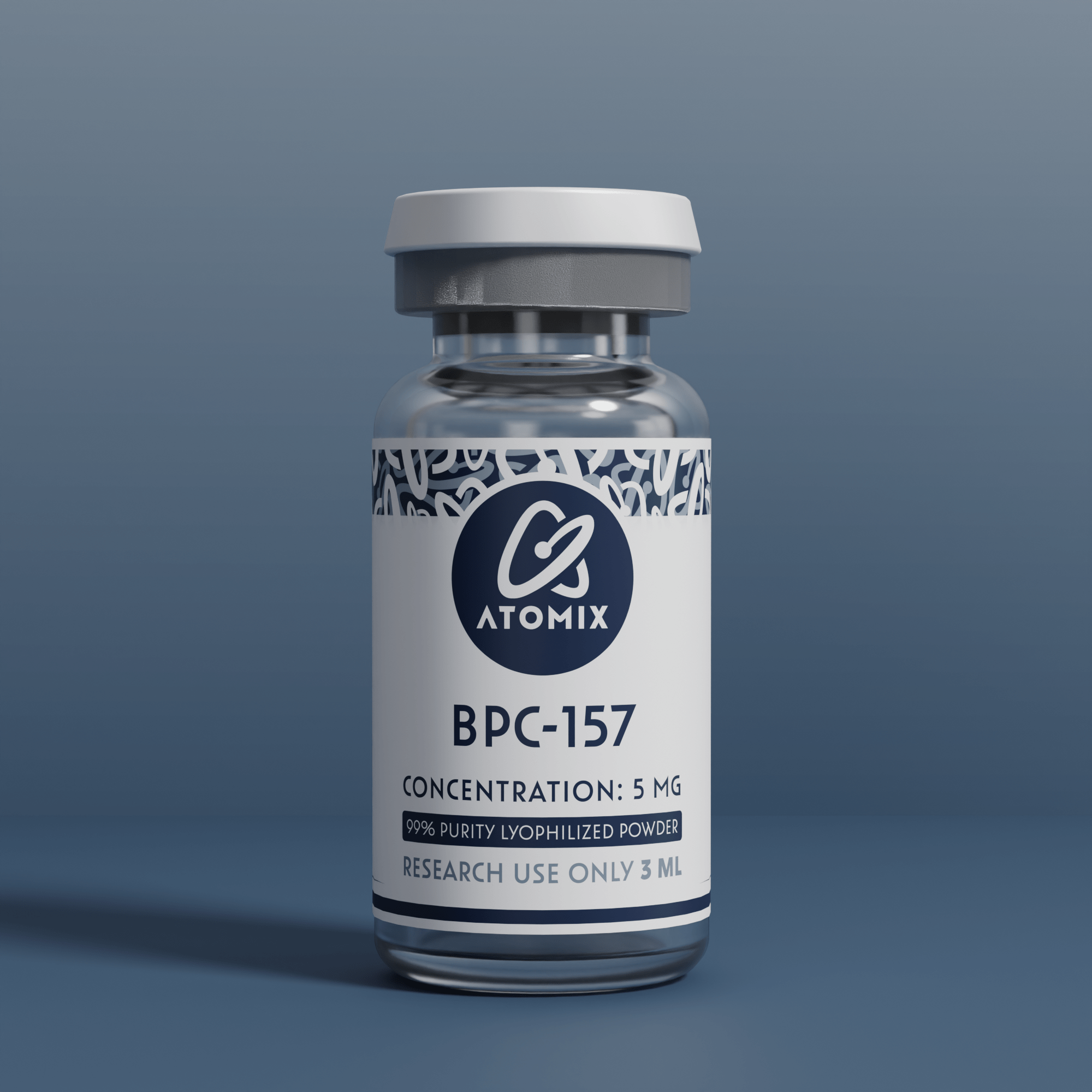
BPC-157 (Body Protection Compound-157) is a synthetic pentadecapeptide derived from a partial sequence of body protection compound found in gastric juice. It has been extensively studied in preclinical models for its regenerative and cytoprotective effects. Research suggests that BPC-157 promotes angiogenesis, accelerates wound healing, supports tendon and ligament recovery, and exhibits gastroprotective properties. Additionally, it has shown potential neuroprotective and cardioprotective activities in various experimental models, making it a widely explored peptide in tissue repair and regenerative medicine research.
| Synonyms | BPC-157, PL-14736, Body Protection Compound-157 |
| Sequence | Gly-Glu-Pro-Pro-Pro-Gly-Lys-Pro-Ala-Asp-Asp-Ala-Gly-Leu-Val |
| Molecular Formula | C62H98N16O22 |
| Molecular Weight | ~ 1419.5 g/mol |
| CAS Number | 137525-51-0 |
| Appearance | White lyophilized powder |
Supplied as a lyophilized powder in vials (5 mg and 10 mg). For short-term storage, keep at room temperature protected from light. For long-term stability, store at –20 °C in a calm, dry environment. Upon reconstitution with sterile water or buffer, aliquot and store at –20 °C, avoiding repeated freeze–thaw cycles.
For laboratory research use only. Products are not for human consumption. Atomix Research is a chemical supplier and not a compounding pharmacy. All products are sold for research, laboratory, or analytical purposes only. You must be over 21 to purchase from this site.
Third-party tested · HPLC verified on every batch
Peer-reviewed literature underpinning this research compound
References are provided for scientific background only. Atomix Research compounds are sold strictly for in-vitro laboratory and research use and are not intended to diagnose, treat, cure, or prevent any disease.
Atomix Research sells research peptides exclusively to qualified researchers and laboratories for in vitro and laboratory use. Please confirm before continuing.
By proceeding you affirm the statements above are true. Products are not for human or veterinary use, not for use in diagnostic procedures, and have not been evaluated by the U.S. Food and Drug Administration.